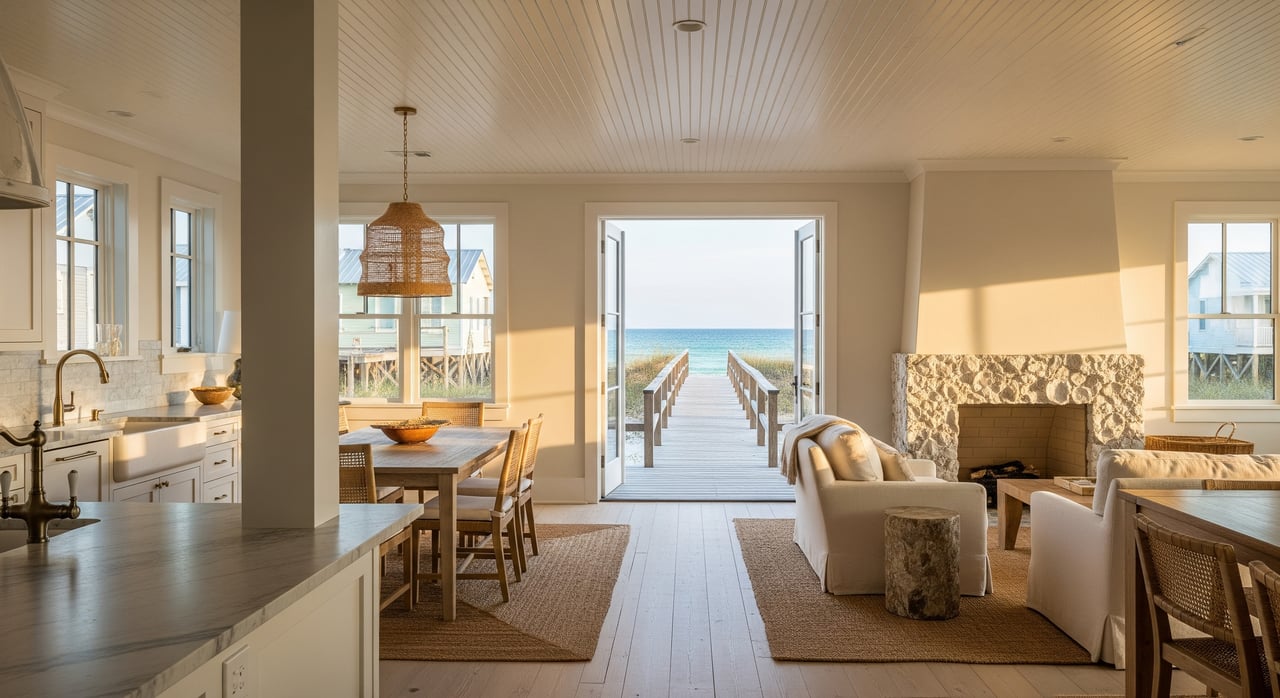
What if the one detail holding back top-dollar offers is your finishes, not your square footage? In WaterColor and the Seaside area, buyers love the coastal lifestyle but expect durable, low-maintenance materials that stand up to salt, sun, and storms. If you are prepping to sell or you want to buy with confidence, knowing which finishes matter will save you time and stress. This guide breaks down what local buyers look for, how materials perform on the Gulf, and which upgrades pay off in peace of mind. Let’s dive in.
WaterColor buyer expectations
In this market, buyers want a turnkey look with proven coastal materials. Salt spray, humidity, intense UV, and seasonal storms drive those choices. You will see strong interest in impact-rated windows, elevated construction, and finishes that resist corrosion and rot. Documentation matters. Expect buyers to ask for roof age, window ratings, decking species, appliance models, and maintenance records. The more you can show that choices fit the climate, the stronger your negotiating position.
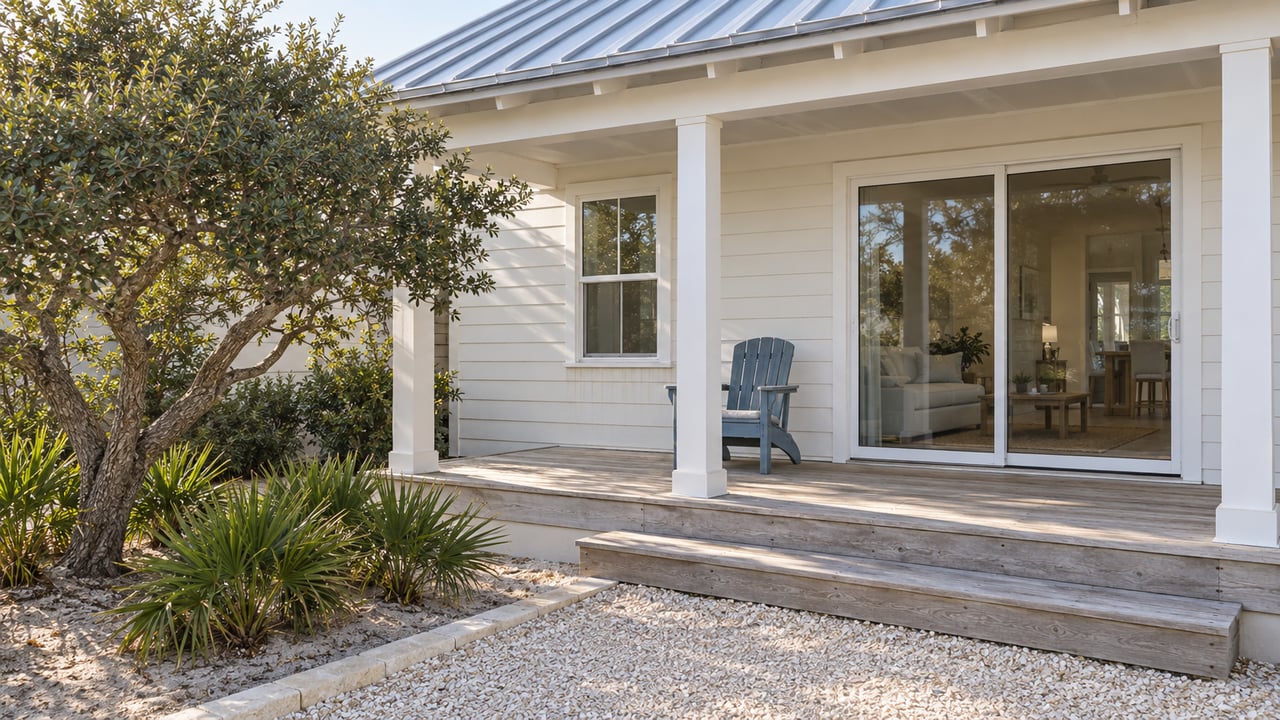
Decking that lasts
Ipe advantages
Ipe is a premium tropical hardwood prized for strength and rot resistance. It can last for decades with proper installation and care. It naturally resists insects and moisture, and buyers view it as a high-quality choice. If you want the rich brown tone, plan on periodic re-oiling; otherwise, it will weather to a silver gray from UV.
Composite considerations
Modern capped composites deliver a clean, low-maintenance look. They resist staining and rot, and they come in coastal-friendly colors. Quality matters. Lower-tier products may scratch or show mold if neglected. Buyers respond well to high-end brands with warranty paperwork and clear maintenance instructions.
PVC performance
PVC decking has very low moisture uptake and stays dimensionally stable in humid, salty air. Lighter colors can help reduce heat gain in full sun. It costs more than many composites, but the maintenance profile is attractive for second-home owners.
Gulf-side installation tips
- Use stainless or corrosion-resistant fasteners.
- Ventilate under the deck and slope for drainage.
- Design to reduce direct salt exposure where possible.
- Keep a record of fastener types, install dates, and any repairs.
Pecky cypress character
Pecky cypress adds instant coastal character with its fluted, rustic texture. It is common on porch ceilings, soffits, and interior accent walls. Cypress has natural oils that help with rot resistance, but UV and moisture will affect the surface over time. Exterior applications need the right finish and periodic resealing.
If low maintenance is your priority, consider fiber-cement trim or synthetic millwork for exterior elements. These alternatives can be a smart choice in rental-focused properties. For resale, buyers respond well to pecky cypress when its condition and refinishing history are documented.
Stone and pavers that perform
Coral stone and coquina
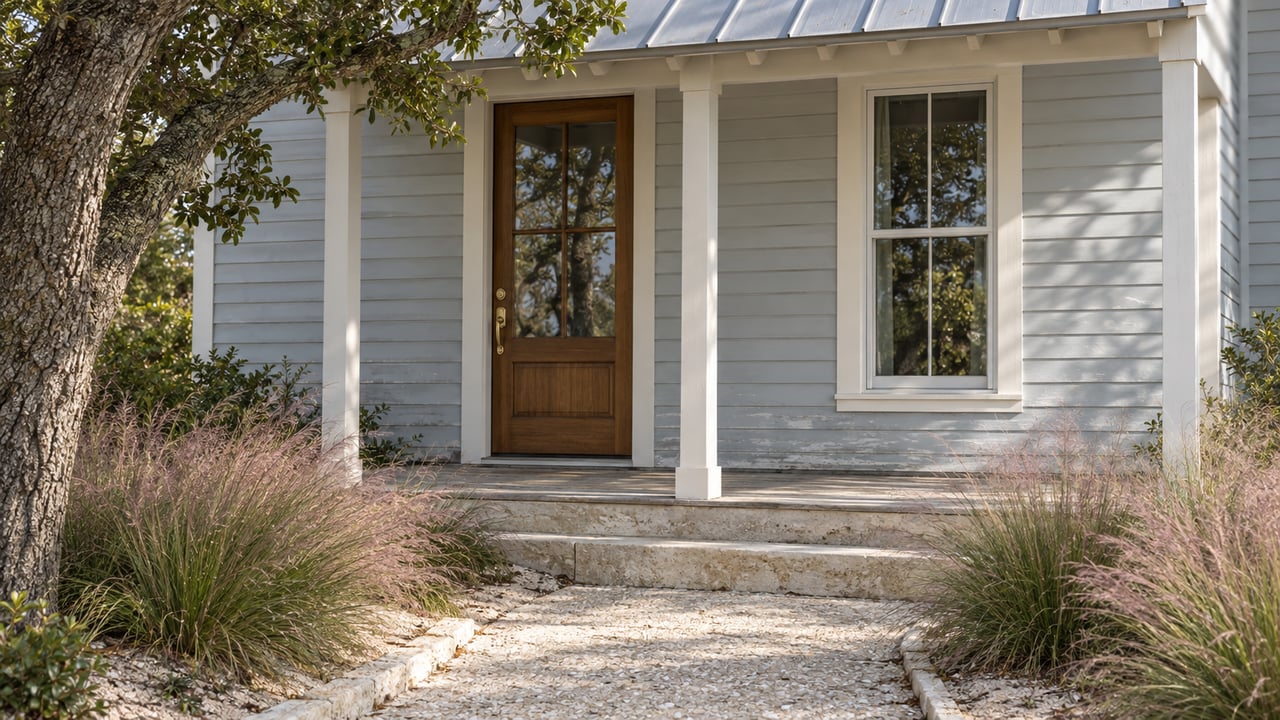
Natural coral stone and coquina have a classic Florida look. They are porous, so they need proper sealing and correct flashing and mortar details in wet, salty environments. Use caution on load-bearing or high-traffic horizontal areas without appropriate engineering and maintenance.
Travertine and limestone
These stones stay comfortable underfoot and complement a coastal palette. They are popular for pool surrounds and patios. Plan for sealing, sand and salt exposure, and a maintenance schedule that keeps surfaces looking uniform.
Porcelain pavers
Porcelain pavers offer high durability, low water absorption, and slip-resistant options. Color consistency and minimal maintenance make them attractive around pools and walkways. Buyers often prefer the low-care profile and predictability.
Best practices
- Use marine-grade adhesives and mortars where needed.
- Select sealants compatible with salt exposure.
- Ensure proper drainage to avoid standing water.
- Keep records of installer, product, and sealing schedules.
Coastal lighting and hardware
Salt air is tough on fixtures and hardware. Buyers notice pitting, peeling finishes, and mismatched metals.
- Favor 316 stainless steel, marine-grade bronze, or powder-coated aluminum with marine finishes.
- Choose UL or ETL outdoor-listed fixtures with appropriate IP ratings.
- Use LED fixtures with integrated drivers to reduce maintenance.
- Plan for routine cleaning and inspection, and keep receipts for replacements.
Outdoor kitchens that last
In WaterColor and Seaside, a well-built outdoor kitchen is a high-value amenity. The focus is durability and code compliance.
- Appliances: Built-in stainless grills and burners are standard. Grade 304 is common; grade 316 offers added corrosion resistance in heavy salt exposure.
- Cabinets: Use stainless or fully weatherproof polymer. Avoid standard wood or MDF.
- Countertops: Choose granite, quartzite, or porcelain tile. Many indoor quartz products are not recommended for full sun unless specified for outdoor UV use.
- Utilities: Confirm licensed installation, GFCI protection, ventilation, clearances, and LP tank placement per code.
Permitting and documentation are essential. Buyers and insurers look for proof that installations meet local requirements.
Impact windows and doors
Impact-rated windows and doors are a must-have for many buyers. They protect against wind-borne debris and often reduce insurance risk. They also improve day-to-day comfort and sound control.
- Verify laminated impact glazing or permitted shutter systems.
- Ensure products meet Florida Building Code requirements for your wind zone and exposure.
- Gather manufacturer certifications, installation records, and warranty details.
In premium coastal neighborhoods, impact glazing is increasingly expected and can be a key differentiator at resale.
Flood-smart lower levels
If a property sits in a flood-prone zone, buyers will look closely at materials and mechanical placements.
- Use flood-resistant materials on lower levels such as tile, concrete, pressure-treated lumber, and closed-cell foam insulation.
- Raise HVAC equipment and utilities above base flood elevation where possible, or use flood-resistant enclosures.
- Provide elevation certificates and details on any wet floodproofing steps.
Documentation here builds confidence with buyers and insurers alike.
Codes, HOAs, and insurance
Florida Building Code governs wind and flood provisions for new construction and many renovations. WaterColor and Seaside also maintain community design guidelines that control exterior materials, colors, and landscape details. Before you modify exteriors or add outdoor amenities, obtain architectural review approvals and permits.
Insurance in coastal Florida changes quickly. Impact glazing, elevated structures, hardened roofing, and proven flood mitigation measures can affect insurability and premiums. Encourage quotes early and disclose any underwriting conditions to buyers.
Maintenance and lifecycle
Buyers in this area expect a clear maintenance profile. Be ready to discuss ongoing care and lifecycle costs.
- Decks: Cleaning routines, oiling or sealing schedules, and fastener replacements.
- Stone and tile: Sealing frequency, grout condition, slip resistance, and storm repairs.
- Exterior wood and cypress: Resealing, caulking, and insect or fungus inspections.
- Outdoor kitchen: Burner cleaning, line flushing, and part replacements.
- Impact glazing or shutters: Post-storm inspections and repair records.
High-end materials like Ipe, 316 stainless, porcelain pavers, and impact glazing cost more upfront but reduce replacement risk over time. Mid-range composites and synthetic millwork can perform well if you select quality products with strong warranties.
Seller pre-listing checklist
- Verify and document roof age and wind rating.
- Confirm impact-rated windows and doors or provide inspection and retrofit records.
- Inspect deck fasteners for corrosion. Disclose decking type and maintenance history.
- Seal or repair exterior stone and verify proper flashing.
- Service outdoor kitchen appliances. Confirm weatherproof cabinet materials.
- Replace or document exterior fixtures with marine-grade finishes and clean lenses.
- Gather permits, HOA approvals, warranties, elevation certificate, and recent insurance loss history.
Buyer walk-through checklist
- What is the decking material and fastener type? Any rot or corrosion repairs?
- Are windows and doors impact-rated? Request product certifications and install records.
- Is the home in a flood zone? Ask for elevation certificate and recent flood premiums.
- What materials are at the first-floor elevation and are they flood-resistant?
- What are the outdoor kitchen and HVAC models and warranty status?
- Request HOA or design guideline documents to confirm allowed materials.
- Look for corrosion on fixtures, fasteners, thresholds, and mechanicals.
Position your WaterColor home to win
The finishes you choose tell buyers how the home will live in salt, sun, and storms. When you specify coastal-grade materials and keep strong documentation, you reduce uncertainty and make your home easier to insure and maintain. That confidence shows up in buyer interest and smoother negotiations.
If you are planning to list or you want a second opinion on finish choices, connect with The Kromer Team for a quick, practical walkthrough and a tailored prep plan.
FAQs
What finishes do WaterColor buyers expect most?
- Buyers expect impact-rated windows, low-maintenance decking, marine-grade lighting and hardware, durable stone or porcelain pavers, and weatherproof outdoor kitchens.
Are impact windows worth it in the Seaside area?
- Yes. Impact glazing protects against wind-borne debris, can improve insurability, and is increasingly expected in high-value coastal neighborhoods.
Which deck material works best near the Gulf?
- Ipe offers premium longevity with maintenance, while high-end composite or PVC provides a clean, low-care option. Installation quality and fastener choice are critical.
Is pecky cypress a good idea outside?
- It can be, if properly finished and resealed over time. Document past refinishing. For low maintenance, consider fiber-cement or synthetic millwork for exterior trim.
What countertop should I use outdoors?
- Choose granite, quartzite, or porcelain designed for exterior use. Many indoor quartz products are not recommended for full sun unless specified for outdoor UV exposure.
What flood documentation will buyers request?
- Expect requests for elevation certificates, descriptions of flood-resistant materials on lower levels, and details on mitigation measures and mechanical equipment placement.